Bogotá Weather Month by Month and What to Pack for a Month-Long Stay
Bogotá Weather Month by Month and What to Pack for a Month-Long Stay
A suitcase for chilly mornings, sunshine, and rain
For a month in Bogotá, bring clothes you can combine and remove throughout the day. A T-shirt, a sweater, and a waterproof jacket let you adjust your layers without returning to your accommodation every time the weather changes.
The city sits about 2.600 meters above sea level. If you arrive from Cartagena, Barranquilla, or a coastal city in another country, plan to take it easy upon arrival: climbing stairs or walking quickly may require more effort than usual.
Before closing your suitcase, think about your routine. Working from home and going out for lunch requires less gear than exploring La Candelaria on foot or hiking in the hills. For a month-long stay, packing for a week and arranging laundry is practical.
Bogotá weather month by month
The calendar helps identify trends, but it does not guarantee dry days. IDIGER describes two periods of heavier rainfall: approximately from mid-March to mid-June and from mid-September to mid-December. Between them are periods with less rainfall. Conditions vary between areas, particularly toward the east and southeast.
- January: usually among the least rainy months. Make the most of it by walking, but keep your waterproof jacket in your backpack. For a long outing, bring a sweater too.
- February: the usually less rainy period continues. Pack clothes you can easily put away when the sun comes out, along with sun protection.
- March: a transition month toward the first rainy season. If your stay extends into April, include a second pair of shoes from the start.
- April: coincides with one of the usual rainfall peaks. Prioritize a waterproof jacket and a bag for wet clothes.
- May: remains among the months with the most rainfall. Arrange laundry before you run out of dry clothes, and alternate shoes when they get wet.
- June: marks the transition toward a less rainy period across much of the city. Keep your rain gear, especially if you will visit eastern areas.
- July: usually has less rain across large urban areas, although the pattern changes toward the east and southeast. Bring an outer layer for your outings.
- August: normally remains within the less rainy period in the middle of the year. Keep the same combination of T-shirt, sweater, and jacket; there is no need to change your entire wardrobe.
- September: combines the end of the less rainy period with the transition toward the second rainy season. Prepare indoor alternatives for longer outings.
- October: forms part of the second rainfall peak. Protect your computer and documents inside your backpack, and avoid relying on a single pair of shoes.
- November: remains among the months with substantial rainfall. Leave time between appointments so you can wait indoors when a downpour interrupts your journey.
- December: usually moves toward less rainy conditions, especially in the second half. Keep your jacket handy and choose clothes that also work for evenings out.
These are climate trends. To decide on a particular walk, check the forecast close to the date and review conditions before heading out.
How to dress in layers
Your first layer can be a comfortable short- or long-sleeved T-shirt. Choose clothes you already wear and can wash easily. If you plan to walk a lot, bring at least one quick-drying T-shirt.
The second layer provides warmth: a sweater, sweatshirt, or lightweight fleece. Bringing two lets you alternate while one is being washed. A garment that is easy to remove is especially useful when you enter a café or start walking.
The outer layer should protect you from rain. Look for a hood and enough room to wear it over your sweater. When trying it on, raise your arms and zip it up completely: you should be able to move without it feeling tight across your shoulders.
For walking along Carrera Séptima or going out in Chapinero, this combination lets you adjust your layers along the way. If you are sensitive to the cold, add a lightweight scarf that fits in your backpack.
A practical packing list for a month-long stay
These quantities assume you will do laundry about once a week:
- Seven T-shirts or tops, including some with long sleeves.
- Two sweaters or sweatshirts that go with the rest of your clothes.
- One hooded waterproof jacket.
- Three pairs of pants; try to make sure at least one dries quickly.
- Underwear and socks for seven to ten days.
- Two pairs of comfortable, already broken-in shoes with good-grip soles.
- Warm pajamas and comfortable clothes for staying at home.
- A compact umbrella and a backpack that closes securely.
- A waterproof bag for documents and electronic devices.
- Sunscreen, sunglasses, a cap, and a reusable water bottle.
Ultraviolet exposure increases with altitude. Include sun protection among your daily essentials, even when you are not going on an excursion.
Leave space to put away your sweater when you do not need it. A backpack that is completely full from the morning makes this adjustment harder.
How much it costs to complete your gear in Bogotá
As a reference checked in 2026, the Decathlon Colombia waterproof jacket catalog lists a Quechua half-zip jacket for around 70.000 COP and full-zip Raincut models for around 99.000 COP. These are specific examples; check the price, size, and availability before buying.
If you already have comfortable shoes and enough sweaters, you can focus that spending on rain protection. Try the jacket on over the clothes you will wear underneath and check that the hood lets you look both ways.
You do not need to buy technical clothing for every city outing. First identify what you are missing after your first few walks.
How to adapt to the altitude during the first few days
The CDC recommends limiting yourself to mild exercise and avoiding alcohol during the first 48 hours at altitude. The initial adaptation phase usually takes place over the first three to five days.
- Arrival day: unpack, eat, and rest. Leave lengthy errands for later.
- First and second days: take short walks with breaks. A gentle walk through Parque El Virrey lets you get started without turning the outing into a workout.
- Following days: increase your activity according to how you feel. Save the climb up Monserrate on foot for when you have adapted and have no symptoms.
A headache accompanied by nausea, dizziness, or fatigue may indicate altitude sickness. Do not continue ascending if you have symptoms. If they worsen despite rest, seek medical attention; shortness of breath at rest, confusion, or difficulty walking require urgent care.
Set up a routine that works with rain
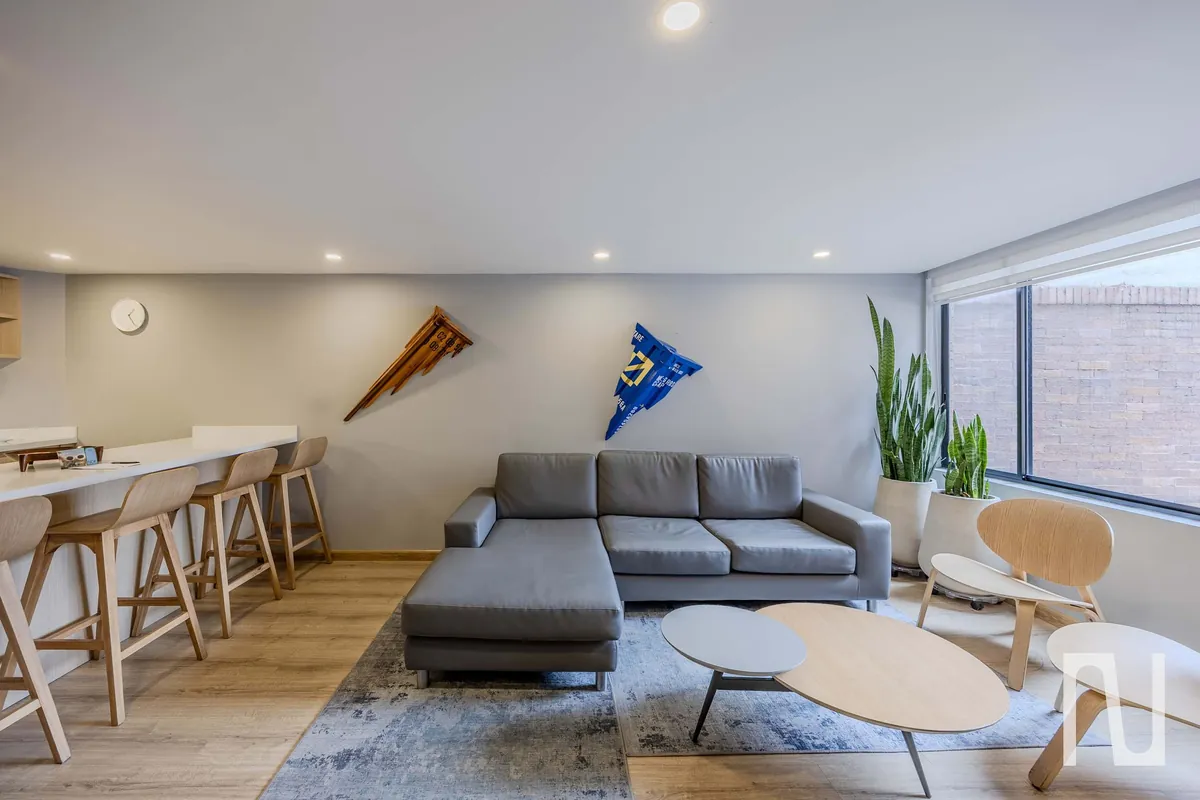
Before booking, ask how you will be able to wash and dry your clothes. If you are considering Atlantis 102, an apartment for monthly stays in Zona Rosa, include that question when planning your arrival.
Keep your waterproof jacket and a bag for your wet umbrella near the door. When you return, take damp clothes out of your backpack and get the next day's shoes ready. This small routine makes living in Bogotá for a month much easier.
Coming to Bogotá for a month or more?
Atlantis 102 is a 3-bedroom apartment in Zona Rosa for stays of 25 nights or more, housekeeper included. Send your dates on WhatsApp.
See the apartment